Insights & Guides
What Is Tools Insurance for Mechanics?

Your tools are what the business runs on. Lose them to theft or a break-in and you cannot work until they are replaced. Here is how tools insurance protects your kit at the workshop, in the van and on the road.
Quick summary
- Tool theft from vans is one of the most frequently reported losses in the motor trade, and a break-in can halt work immediately.
- A well-arranged tools policy follows your equipment to the workshop, the van, offsite jobs and customer locations.
- High-value items like dealer-level scan tools may need to be individually specified on the schedule to be fully covered.
- Agreed value settlements remove depreciation arguments and make it straightforward to replace stolen or damaged tools.
- Most policies cover theft from a locked vehicle, but may require specific security measures such as deadlocks or internal cages.
- Updating your schedule when you buy new equipment ensures you are not underinsured when you need to claim.
Summarise this with AI
Open a quick summary of this guide in your preferred AI assistant.
Why a mechanic's tools are not just equipment
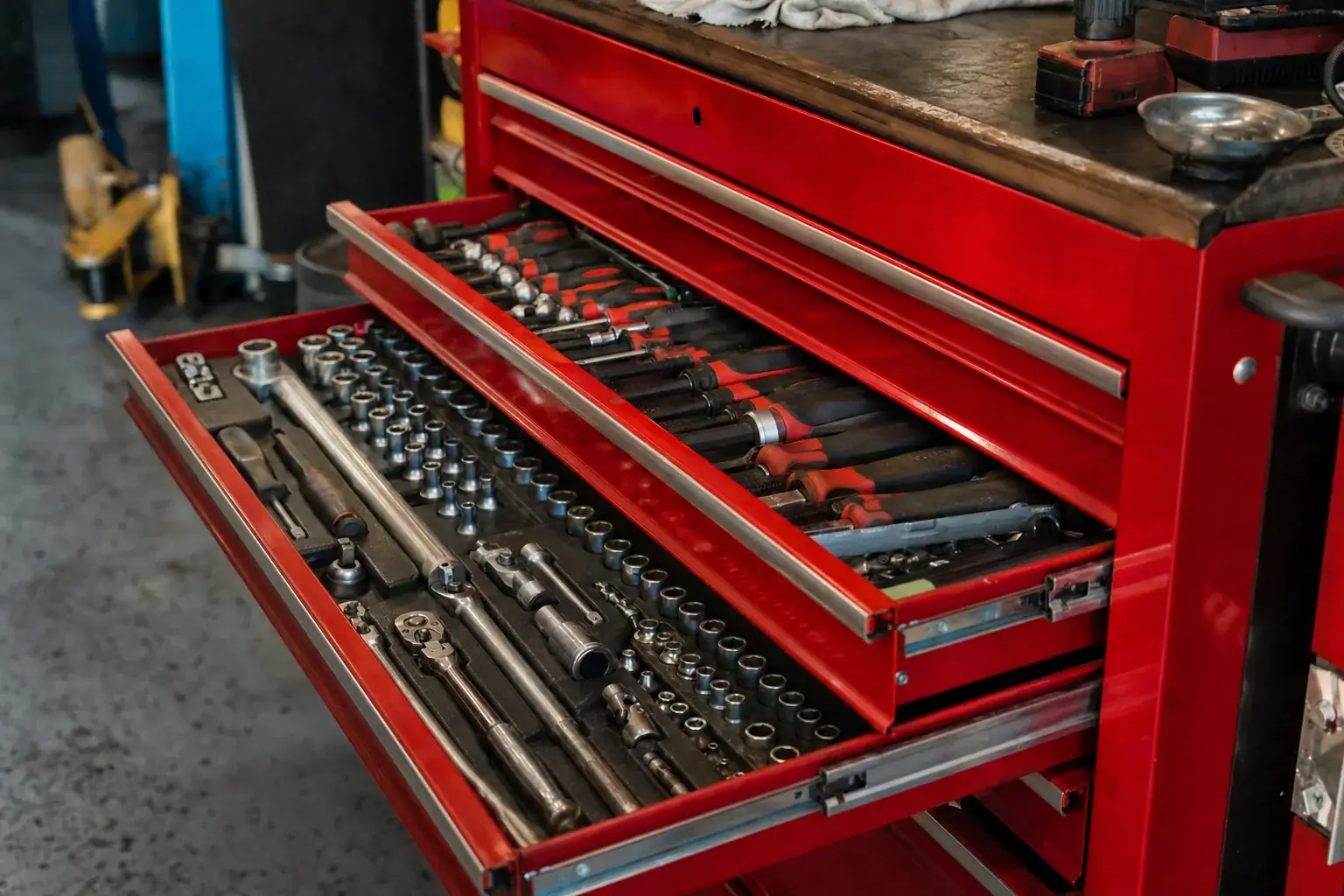
A mechanic's tool kit represents years of investment and is often the most valuable asset in the business after the premises itself. A mid-range roller cabinet with a full set of sockets, spanners, screwdrivers, pliers and specialty tools runs to a significant amount. Add a scan tool and diagnostic unit, an air compressor, torque wrenches calibrated to specific ranges, brake lathe, engine crane, and the electronic testing equipment that modern vehicles require, and the total quickly becomes substantial.
The problem with tool theft is not just the value, it is the disruption. A break-in that takes the van's contents overnight can mean no work the next morning, extended lead times sourcing replacements, and a week or more of disrupted jobs. Tools and equipment insurance is designed to turn that scenario from a crisis into a claim so the downtime is measured in days rather than weeks.
It is also one of the most commonly claimed covers in the motor trade. Tools theft from vans, workshop break-ins, and accidental damage to diagnostic equipment all happen regularly, and the policies exist because the need is real. Tools and equipment insurance is the cover built specifically for this.
What does a tools policy cover for mechanics?
The strength of a well-arranged tools policy is that it follows your equipment rather than tying it to a single address. A mechanic's tools move constantly, from the workshop to the van to job sites, and the cover needs to reflect that.
- Hand tools: spanners, sockets, screwdrivers, pliers, wrenches and specialty tools in the cabinet or in transit
- Power tools: air and electric ratchets, impact drivers, drills and grinders
- Diagnostic equipment: scan tools, oscilloscopes, TPMS programmers, battery testers, and dealer-level diagnostic units
- Air compressors and pneumatic equipment, whether fixed in the workshop or portable
- Engine cranes, brake lathes, press tools and other workshop equipment
- Tools stored in the van or locked utility boxes mounted to the vehicle
- Tools at offsite job sites and customer locations during a job
Most policies include a single-item limit, above which high-value items need to be separately listed on the schedule. A dealer-level scan tool, a calibrated torque wrench set, or a specialist piece of diagnostic equipment may easily exceed the automatic per-item limit. If it is not specified, the policy will only pay up to the sub-limit for that item, regardless of what it cost. It is worth reviewing your schedule against what you actually carry.
Theft from a locked van, the most common scenario
Tool theft from vehicles is one of the most frequently reported losses in the motor trade. A locked van parked outside a job site, in a shopping centre car park, or on the street overnight is a target, and experienced thieves can be through the side doors faster than most people expect. This is a particularly common exposure for mobile mechanics who carry their full kit in transit every day.
Many tools policies extend to theft from a locked vehicle. The conditions that apply vary between policies, and some require specific security measures such as deadlocks, internal cages, or alarm systems. If van security is an area where you rely on your tools policy, it is worth confirming what the policy actually requires rather than assuming.
Keeping a record of what you carry, with photos and serial numbers for higher-value items, is the most practical step you can take before a claim ever happens. It speeds the claim process significantly and removes potential disputes about what was in the van.
Agreed value versus market value settlements
How a claim is settled depends on whether cover is arranged on an agreed value or market value basis. Agreed value means the insured value of your equipment is fixed at the time the policy is set up. If you claim, there is no depreciation argument, and the settlement is based on the agreed figure.
Market value settles on what the item was worth at the time of the loss. For tools that depreciate over time, this can produce a settlement lower than the replacement cost of a comparable item. A seven-year-old compressor may be settled at a fraction of what a new equivalent costs.
For working mechanics who need to replace tools quickly with functioning equivalents, agreed value is generally the more practical basis. It removes the uncertainty from the settlement and makes it straightforward to get back to work.
Keeping your schedule current as your kit grows
Mechanics invest in new equipment regularly, whether it is upgrading to a newer diagnostic platform, adding calibration tools for ADAS systems, or buying an additional set for a second bay. A tools policy is only as good as the schedule behind it, and a schedule that was accurate two years ago may not reflect what you carry today.
Newly purchased equipment can usually be added to the policy mid-year. It is good practice to notify us when you make a significant purchase so it is captured before a loss occurs rather than after. We can also help you review the single-item limits and confirm that your highest-value pieces are individually specified. Contact us to review your current schedule.
Frequently Asked Questions
Most mechanics rely on their tools to work, and a break-in or theft can stop the business overnight. Tools and equipment insurance is designed to turn that kind of loss into a claim rather than a crisis, which is why it is one of the most commonly arranged covers in the motor trade.
Related Cover & Guides
This guide is general information only and does not take your specific circumstances into account. Mechanics Insurance is an insurance broker. We help you review and arrange cover, we do not underwrite or issue policies. Cover terms, limits and exclusions vary by policy and insurer.
Ready to Sort Your Cover?
Tell us about your business and we will help you review your options, no obligation.