
Insights & Guides
What Is Motor Trade Road Risk Insurance?

If you road-test, collect or deliver customer vehicles, a standard motor policy leaves you exposed every time you take the wheel. Here is how motor trade road risk works, what it covers, and the practical details that matter most.
Quick summary
- A standard motor policy covers a specific listed vehicle - it does not extend to driving customer vehicles you do not own.
- Motor trade road risk applies to road tests, collections, deliveries, and moving vehicles around the workshop forecourt.
- Cover is available at third-party only, third-party fire and theft, and comprehensive levels - the level affects what happens to a customer vehicle if there is an accident.
- Road risk is tied to the trade activity, not a specific vehicle, making it practical for workshops handling many different cars.
- The scope of drivers covered must be set correctly at policy inception - an apprentice not within that scope may not be covered.
- Road risk and garage keepers liability each cover different scenarios involving customer vehicles, and the boundary between them is worth understanding clearly.
Summarise this with AI
Open a quick summary of this guide in your preferred AI assistant.
The problem a standard motor policy cannot solve
A standard comprehensive motor policy covers a specific vehicle listed on the schedule, driven by named people, usually with an age restriction. That structure works for a vehicle you own and drive yourself. It does not work for a mechanic who might drive ten or twenty different customer vehicles in a single week.
Motor trade road risk insurance is built specifically for that scenario. It gives you and your authorised drivers the ability to legally drive customer vehicles, trade vehicles, and business vehicles on public roads without each one needing its own individual policy, its own schedule entry, or its own notification to an insurer.
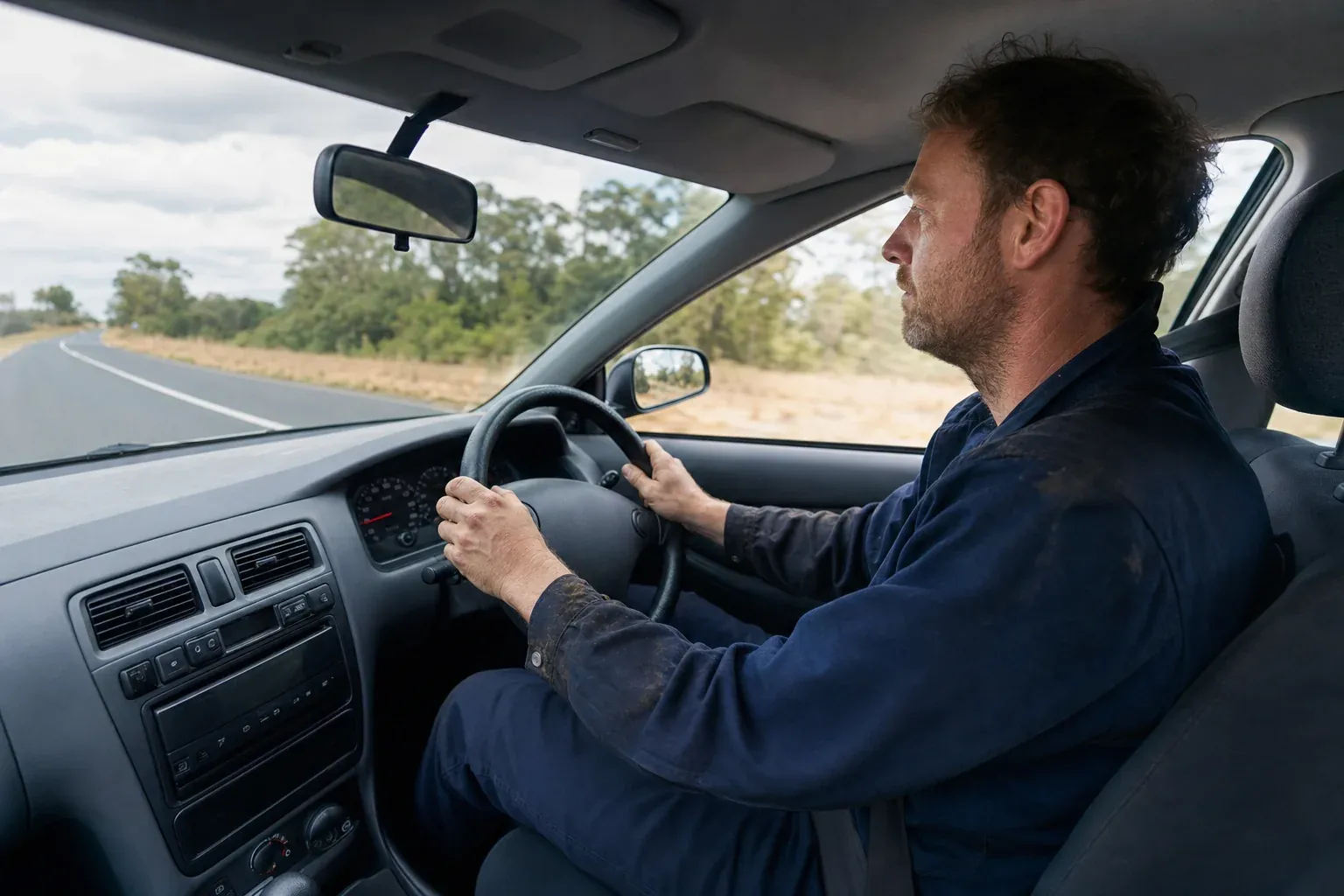
Without it, every time you reverse a repaired car out of the bay, drive it to test the brakes, or collect a vehicle from a customer's home, you are doing so without cover. That exposure is real and the consequences of an accident in those circumstances are serious. Motor trade road risk is the cover built specifically for this activity.
When road risk applies in a typical working day
Road risk is relevant in more situations than most mechanics initially realise. It is not just about formal road tests after a service.
- Road-testing a vehicle after a brake, suspension or steering repair to confirm the work is correct
- Collecting a customer vehicle from their home or workplace before the job
- Delivering a completed vehicle back to the customer after the service
- Moving customer vehicles between bays, in and out of the workshop, or around the car park
- Moving trade vehicles purchased for resale between locations
- Test-driving a vehicle you are considering buying for the business or for resale
- Allowing an employee or apprentice to move or drive a customer vehicle as part of their duties
Most road risk policies include a maximum vehicle value limit. If you regularly handle prestige vehicles, modified performance cars, or commercial trucks, those vehicles may need to be individually noted or may require a separate arrangement. It is worth confirming the vehicle values your policy covers reflect the vehicles you actually handle, not just an assumed average.
The cover levels available and what each means
Motor trade road risk is generally available at several levels of cover, similar to the options available on a standard motor policy. The level you choose affects what the policy pays for in the event of an accident.
Third-party only is the most basic level, covering damage or injury to other people and their property but not damage to the vehicle you are driving at the time. Third-party fire and theft adds cover for fire and theft of the vehicle. Comprehensive is the broadest option, covering accidental damage to the vehicle as well as third-party liability.
For a mechanic handling customer vehicles, the choice of level matters because it affects what happens to a customer's car if there is an accident during a road test or delivery. Many workshops operating comprehensive road risk can respond to damage caused to a customer vehicle while it is being driven by the mechanic, though the relationship between road risk and garage keeper's cover in that scenario is worth understanding clearly.
How it differs from a commercial vehicle policy
Commercial vehicle insurance covers a specific vehicle or fleet of vehicles that your business owns and operates: your service van, your tow truck, your courtesy car fleet. It is tied to those specific vehicles by registration and it does not extend to driving other vehicles you do not own.
Motor trade road risk covers you to drive a variety of vehicles in the course of your trade, without each vehicle needing its own policy. It is tied to the trade activity rather than a specific vehicle.
Many motor trade businesses hold both. They own a work van or tow truck covered under a commercial vehicle policy, and they also hold road risk cover so their staff can drive customer vehicles. The two covers do different jobs and sit alongside each other without overlap.
Getting the driver scope right from the start
One of the most consequential decisions when arranging road risk is who is covered to drive. The scope of drivers, including named principals and any authorised employees, is agreed when the policy is set up. A driver who is not within that scope, whether because they are too young, not named, or outside the agreed licence class, may find they are not covered if an accident occurs.
This matters particularly for workshops that take on apprentices. An apprentice who is asked to move a customer vehicle, even within the workshop forecourt, needs to fall within the scope of the road risk cover for that activity to be covered. Getting the driver scope right at setup is far simpler than resolving a coverage dispute after a claim.
We can help you work through the driver scope and the vehicle values your business handles so the cover reflects how you actually operate rather than an assumed norm. Where garage keeper's liability and road risk interact is also worth understanding clearly before a claim makes it urgent.
Frequently Asked Questions
No. A personal motor policy covers you to drive a specific listed vehicle, and it does not extend to driving a customer's vehicle that you do not own. Driving a customer car without road risk cover means you are uninsured for that vehicle, even if you hold comprehensive personal cover on your own car.
Related Cover & Guides
This guide is general information only and does not take your specific circumstances into account. Mechanics Insurance is an insurance broker. We help you review and arrange cover, we do not underwrite or issue policies. Cover terms, limits and exclusions vary by policy and insurer.
Ready to Sort Your Cover?
Tell us about your business and we will help you review your options, no obligation.