
Insights & Guides
Workers Compensation for Mechanic Workshops
The moment you employ someone in your workshop, including an apprentice, workers compensation becomes a legal obligation not an option. Here is how the scheme works, what it covers, and what changes state by state.
Quick summary
- Workers compensation is legally required from the first day you employ anyone in your workshop, including apprentices.
- Each Australian state and territory runs its own scheme with its own rules, premiums and return-to-work requirements.
- Premium is calculated primarily on your wages bill, with your claims history becoming a factor over time.
- Family members who receive a wage or benefit from the business are generally considered employees for workers compensation purposes.
- Subcontractors may or may not be covered depending on the state and how the engagement is structured - this is worth confirming.
- Workshop-specific injury risks include manual handling, chemical exposure, power tool injuries and noise damage.
Summarise this with AI
Open a quick summary of this guide in your preferred AI assistant.
Why workers compensation is not optional
Workers compensation is a statutory scheme, not a voluntary purchase. In every Australian state and territory, an employer is legally required to hold workers compensation cover before they employ anyone, and the obligation begins from the first day of employment, not after a probation period or once payroll reaches a certain level.
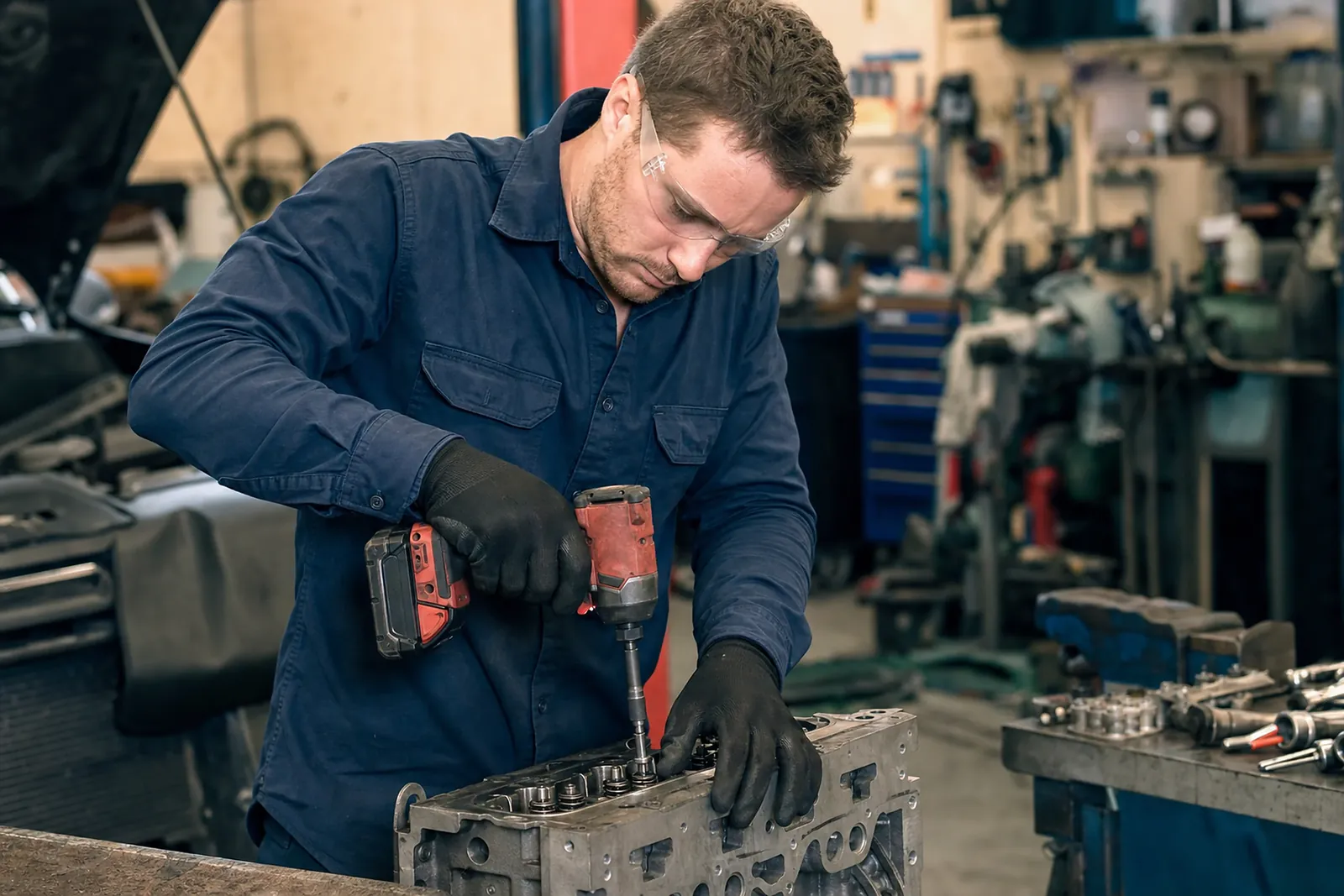
A motor trade workshop is an environment with genuine injury risk. Mechanics work under vehicles on hoists, handle heavy components including gearboxes, differentials and engines, use high-pressure pneumatic tools, work with chemicals including solvents, battery acid and brake fluid, and operate in a space shared with moving vehicles. The injury profile of the trade is real and the scheme exists to respond to it.
Operating without the required cover exposes the employer to significant personal liability for an injured worker's wages, medical costs and rehabilitation, plus the penalties that apply for non-compliance. These are not theoretical risks. And for sole traders who work alone, personal accident and illness cover fills a gap that workers compensation does not address.
How the scheme works state by state
Workers compensation in Australia is administered at the state and territory level, not federally. Each state has its own scheme, its own regulator, and its own rules about premiums, benefits, and employer obligations. The core principle is the same everywhere: an injured worker is entitled to compensation for lost wages and medical treatment, and the employer's policy funds that.
- Western Australia: administered through WorkCover WA; employers hold a policy with an approved insurer; premium is calculated on wages and industry classification
- New South Wales: administered through icare; most employers hold an icare policy; premium is calculated on wages and experience rating
- Victoria: administered through WorkSafe Victoria; premiums calculated on wages and workplace injury history; a return-to-work coordinator is required for larger employers
- Queensland: administered through WorkCover Queensland, the sole statutory insurer; employers obtain cover directly through WorkCover QLD; premium reflects wages and claim history
- South Australia: administered through ReturnToWorkSA; a single insurer model with premiums based on wages and industry rate
- Tasmania: administered through WorkCover Tasmania; employers hold cover with licensed insurers; the scheme is similar in structure to WA and NSW
- Northern Territory: administered through NT WorkSafe; employers hold cover with a licensed insurer
- Australian Capital Territory: administered through WorkSafe ACT
If you employ workers who regularly work across state lines, for example a mobile mechanic who takes jobs in both Western Australia and South Australia, the rules around which state's scheme applies can be complex. It is worth getting advice on your specific circumstances rather than assuming cover in one state extends automatically to work in another.
Who counts as an employee for workers compensation purposes
This is one of the most important questions for a workshop owner to understand correctly, because the definition of employee for workers compensation purposes is broader than the everyday meaning of the word.
Apprentices are employees and must be covered from day one. Casuals and part-time workers are employees. Labour hire workers placed with your business may be covered under the labour hire company's policy, but it is worth confirming that in writing rather than assuming it. Family members who work in the business and receive a wage or benefit are generally employees for these purposes.
Subcontractors are a more complex area. A genuine independent subcontractor who works for multiple clients, provides their own tools, and sets their own hours is typically not an employee. But a subcontractor who works exclusively for you, uses your tools, and follows your direction may be deemed a worker under workers compensation legislation, depending on the state. If you use subcontractors in your workshop, it is worth understanding how your state's legislation treats that arrangement.
What the cover provides for an injured worker
When a worker is injured at a motor trade workshop, the workers compensation scheme provides a range of entitlements. These vary by state but broadly include weekly payments replacing lost wages while the worker cannot work, medical and hospital expenses related to the injury, rehabilitation expenses to support a return to work, and in cases of permanent impairment, lump sum compensation.
As an employer, you also have obligations beyond holding the policy. Most states require you to notify the insurer promptly when an injury occurs, to cooperate with the rehabilitation and return-to-work process, and to maintain records of workplace injuries. Failing to notify promptly can affect how a claim is handled.
Workshop-specific injuries that generate claims include manual handling injuries from lifting heavy components, eye injuries from grinding and cutting work, hand injuries from power tools, chemical burns from contact with solvents and acids, and hearing damage from prolonged noise exposure.
What drives the premium and how to manage it
Workers compensation premium is calculated primarily on your wages bill. A larger payroll means a higher base premium, all else being equal. The industry classification for motor vehicle repair also carries a specific risk rate that reflects the historical claims experience of the trade.
Your business's own claims history is a factor once you have been trading for long enough to develop an experience rating. A workshop with a poor injury record will generally pay more than one with a clean history. This is why genuine investment in workplace safety, from correct hoist maintenance to tool handling procedures, has a direct financial return over time.
We can help you arrange workers compensation through the appropriate state scheme and understand the obligations that apply to your business. If you are unsure whether you need cover or which scheme applies to your workers, it is worth getting that confirmed before something happens. Speak to a broker about the requirements in your state.
Frequently Asked Questions
Yes. An apprentice is an employee from the first day of the apprenticeship, and the obligation to hold workers compensation cover applies from that point. The size of the wages bill affects the premium, but the obligation to have cover exists regardless of how many people you employ.
Related Cover & Guides
This guide is general information only and does not take your specific circumstances into account. Mechanics Insurance is an insurance broker. We help you review and arrange cover, we do not underwrite or issue policies. Cover terms, limits and exclusions vary by policy and insurer.
Ready to Sort Your Cover?
Tell us about your business and we will help you review your options, no obligation.