Insights & Guides
Insurance for Diesel Mechanics and Heavy Vehicle Repairers
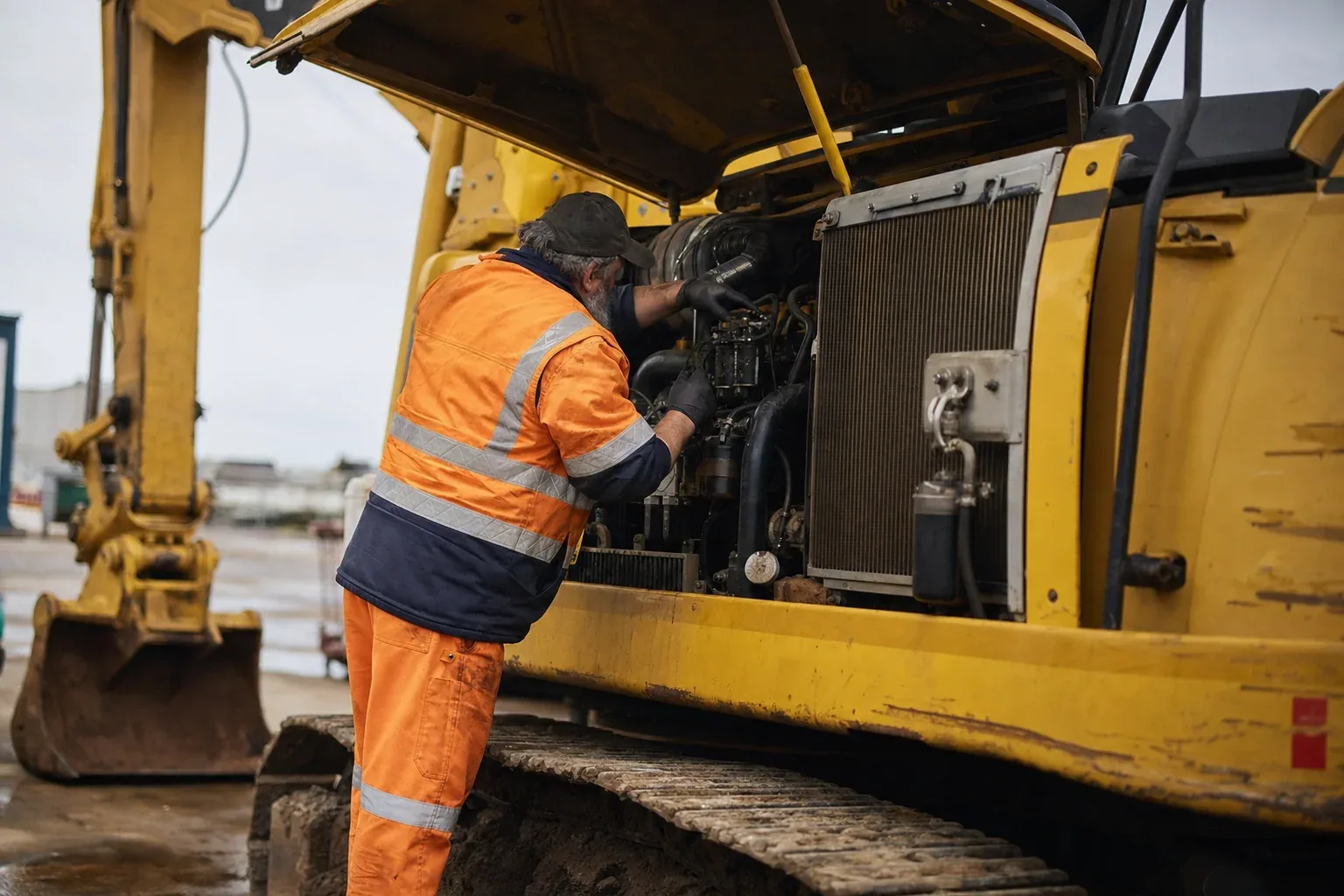
Working on heavy vehicles, prime movers, rigids, and earthmoving equipment creates a risk profile that is meaningfully different from a general automotive workshop. The vehicles are heavier, the components are larger, and the consequences of a failure are more severe. Here is how insurance cover needs to reflect that.
Quick summary
- Diesel and heavy vehicle workshops face higher-value vehicle and equipment claims than general automotive workshops.
- Garage keeper's liability limits need to reflect the actual value of trucks and earthmoving equipment on the premises.
- Tools cover must account for large-format diesel diagnostic systems and heavy-duty workshop equipment.
- Motor trade road risk needs to extend to the classes of vehicles you road-test, including heavy combinations.
- Workers compensation applies from the first employee and diesel workshop injury rates drive state premium calculations.
- A broker who understands the diesel trade can help you set cover levels that reflect the realistic worst case, not just an average.
Summarise this with AI
Open a quick summary of this guide in your preferred AI assistant.
How diesel and heavy vehicle work differs from general automotive
A suburban mechanic servicing passenger cars and a diesel workshop maintaining a fleet of B-double prime movers or tri-axle tipper trucks are both in the motor trade, but the risk environment is substantially different. The vehicles are heavier, the components that need lifting and handling are larger, and the downstream consequence of a failure, such as brake fade on a fully laden articulated truck on a highway descent, is far more serious.
That difference flows through to how cover should be structured. The value of a single commercial vehicle on the premises can be multiples of a passenger car, which affects the limit required on a garage keeper's policy. The equipment needed to service a diesel engine or a heavy drivetrain is more expensive and more specialised than hand tools for passenger car work. The road risk situation becomes more complex when the vehicles being tested are multi-combination heavy vehicles requiring a licence class above a standard car.
None of this means the covers themselves are fundamentally different. Public liability, garage keeper's liability, tools and equipment, road risk, and workers compensation all apply. What changes is how the limits and scope need to be set to reflect the actual exposures a diesel workshop faces.
Garage keeper's liability for high-value commercial vehicles
When a prime mover, a refrigerated semi-trailer or a large earthmoving machine is on your premises for a service, inspection or repair, the value of that single vehicle can be substantial. A road freight operator's Kenworth or Mack prime mover with a well-maintained service history can represent a significant asset. If that vehicle is damaged in your workshop by a fire, a workshop accident, or a theft event, the garage keeper's liability limit needs to be adequate to respond to the full extent of the claim.
A common mistake is setting the garage keeper's limit based on the average value of vehicles handled, rather than the realistic worst case. For a diesel workshop that might hold several heavy trucks simultaneously, the aggregate value of vehicles on the premises can be considerable.
- Prime movers and road tractors, including day cab and sleeper cab configurations
- Refrigerated semi-trailers and curtainsider trailers stored for assessment or repair
- Rigid trucks in the GVM range above 12 tonnes, including concrete agitators and tipper bodies
- Buses and coaches undergoing scheduled maintenance or drivetrain overhauls
- Earthmoving equipment including excavators, graders, bulldozers and wheel loaders transported to the yard
- Agricultural machinery and tractors serviced through the workshop
The total aggregate value of vehicles on the premises at one time, not the value of one average vehicle, is the figure that should drive your garage keeper's limit. A workshop that regularly holds three or four heavy trucks during scheduled servicing windows needs a limit that could respond to a fire event affecting all of them.
Tools and equipment for the diesel trade
The tools required for diesel and heavy vehicle work are generally more expensive than those for passenger car servicing. Heavy-duty diagnostic systems such as the Jaltest, Delphi DS, or Noregon JPRO platforms carry a significantly higher replacement value than a standard OBD-II scan tool. DPF cleaning and testing equipment, diesel injector bench testing units, and fuel system pressure testing rigs all represent meaningful individual values.
Workshop equipment follows the same pattern. A mobile column lift capable of raising a B-double axle group safely is a different class of investment to a two-post passenger car hoist. Diesel timing tools, injector removal kits for common rail systems, and coolant system pressure testing sets for large diesel engines are specific to the trade and not cheap to replace.
When arranging a tools and equipment policy, it is worth reviewing the single-item limit and confirming that your highest-value diagnostic and workshop equipment is individually specified on the schedule. A multi-function diesel diagnostic system that is not captured individually may only be settled at the per-item sub-limit if it is stolen or damaged.
Motor trade road risk for heavy vehicle classes
Road-testing a rigid truck after a brake adjustment or a prime mover after a suspension overhaul is a standard part of the diesel workshop workday. Motor trade road risk is the cover that allows you to do this legally on public roads without each vehicle needing its own individually listed policy.
The driver scope matters significantly in the heavy vehicle trade. Road-testing a heavy combination requires at least a heavy rigid or multi-combination licence depending on the configuration. A road risk policy needs to be set up with the appropriate licence classes in mind, and drivers who hold only a light rigid or car licence cannot be within the scope for heavy vehicle tests regardless of what the policy says in general terms.
Maximum vehicle weight is another parameter to check. Some road risk policies specify a maximum vehicle GVM or GCM. A diesel workshop regularly road-testing vehicles above that threshold needs the policy to reflect the actual vehicles it handles.
Workers compensation in a diesel workshop
The injury profile of a diesel workshop is shaped by the nature of the work. Manual handling of heavy components including diesel engines, gearboxes, differentials and prop shafts creates a meaningful back and musculoskeletal injury risk. Working under large vehicles on jack stands or column lifts introduces crush and entrapment risks that are different in severity to passenger car workshop work. Diesel exhaust particulate exposure in enclosed workshop environments is a long-term health consideration.
Workers compensation is a legal requirement in every Australian state and territory from the first day of employment. The scheme in your state determines the premium calculation, the insurer, and the return-to-work obligations. In Western Australia the scheme is through WorkCover WA; in Victoria through WorkSafe Victoria; in Queensland through WorkCover Queensland; in New South Wales through icare; in South Australia through ReturnToWorkSA. Industry classification rates for motor vehicle repair reflect the historical claims experience of the trade, and the diesel and heavy vehicle segment sits within that framework.
As an employer, prompt notification of any workplace injury, active participation in rehabilitation, and maintenance of detailed records are all obligations that sit alongside holding the cover itself. For more on the specific needs of the diesel and heavy vehicle trade, see our guide for diesel mechanics.
Frequently Asked Questions
The right limit depends on the nature of your work and the contracts you operate under. Fleet operators, mining companies, and government transport agencies frequently specify minimum public liability limits as a condition of work. The potential severity of a third-party claim arising from a heavy vehicle fault is also generally higher than from a passenger car repair, which is worth factoring into the limit you choose.
Related Cover & Guides
This guide is general information only and does not take your specific circumstances into account. Mechanics Insurance is an insurance broker. We help you review and arrange cover, we do not underwrite or issue policies. Cover terms, limits and exclusions vary by policy and insurer.
Ready to Sort Your Cover?
Tell us about your business and we will help you review your options, no obligation.